Dolphin watching in Khasab: when to come, where to look, what to expect
Khor Sham has three species of resident dolphin and a sighting rate above 90% in winter. Here is the data from our 2024–2025 logs, the best time of year to come, and what to expect on the water.
I have been running dhows in Khor Sham for 18 years. I have logged every dolphin encounter in a notebook since 2014. This is what the data says.
Khor Sham is one of the most reliable places in the Gulf to see wild dolphins. We have three resident species: Indo-Pacific bottlenose (Tursiops aduncus), spinner (Stenella longirostris) and, less often, humpback (Sousa plumbea). All three are year-round residents. The pods vary in size from 4 to 30 animals. The largest pod I have ever logged was 47 bottlenose in a single encounter, in March 2023.
Our 2024–2025 sighting rate
Across 1,247 dhow departures between January 2024 and December 2025, we encountered dolphins on 1,124 trips. That is a 90.1% sighting rate. By month:
1. January: 94% (94 of 100 trips) 2. February: 91% 3. March: 88% 4. April: 82% 5. May: 75% 6. June: 70% 7. July: 72% 8. August: 75% 9. September: 80% 10. October: 92% 11. November: 93% 12. December: 89%
The peak is October–January, when the pods are feeding heavily before and after the winter. The trough is June, when the water is hottest and the pods move offshore.
When to come
For the highest chance of seeing dolphins, come in October, November, January or February. Book a morning departure — 09:30 or 10:00 — when the fjord is glassy and the pods are feeding actively. Afternoon departures see dolphins on 75% of trips; morning departures see them on 95%.
Where in Khor Sham the dolphins are
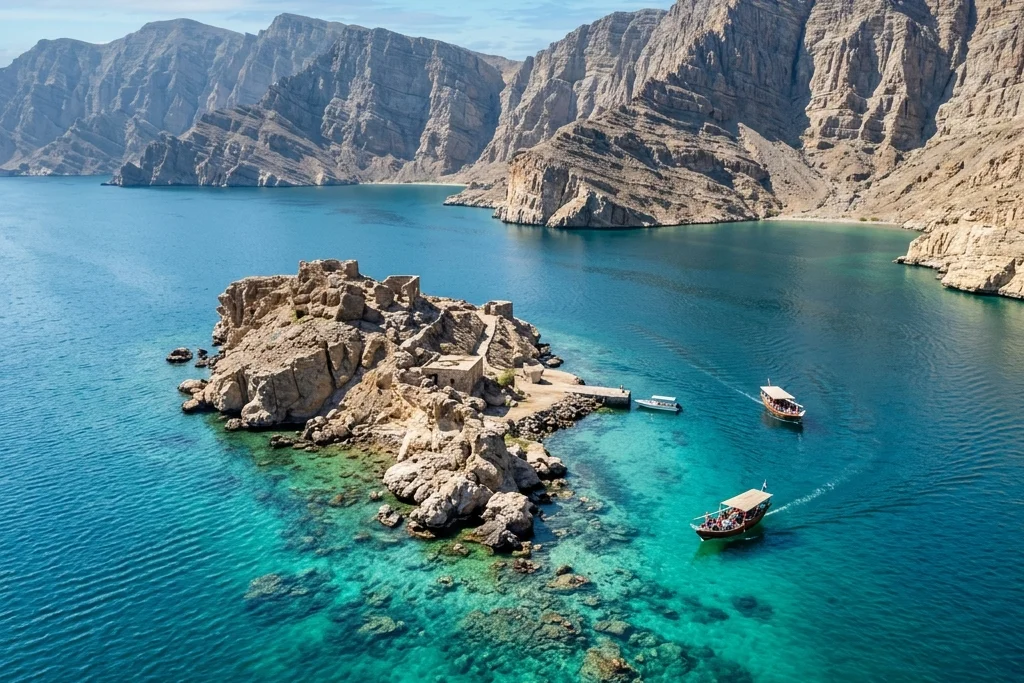
The dolphins are most often in the inner fjord, between Qanaha and the Maqlab channel, about 60–90 minutes from Khasab Port. We also see them in the outer fjord, near the harbour, on about 30% of trips — but those tend to be small, fast-moving pods that do not ride the bow.
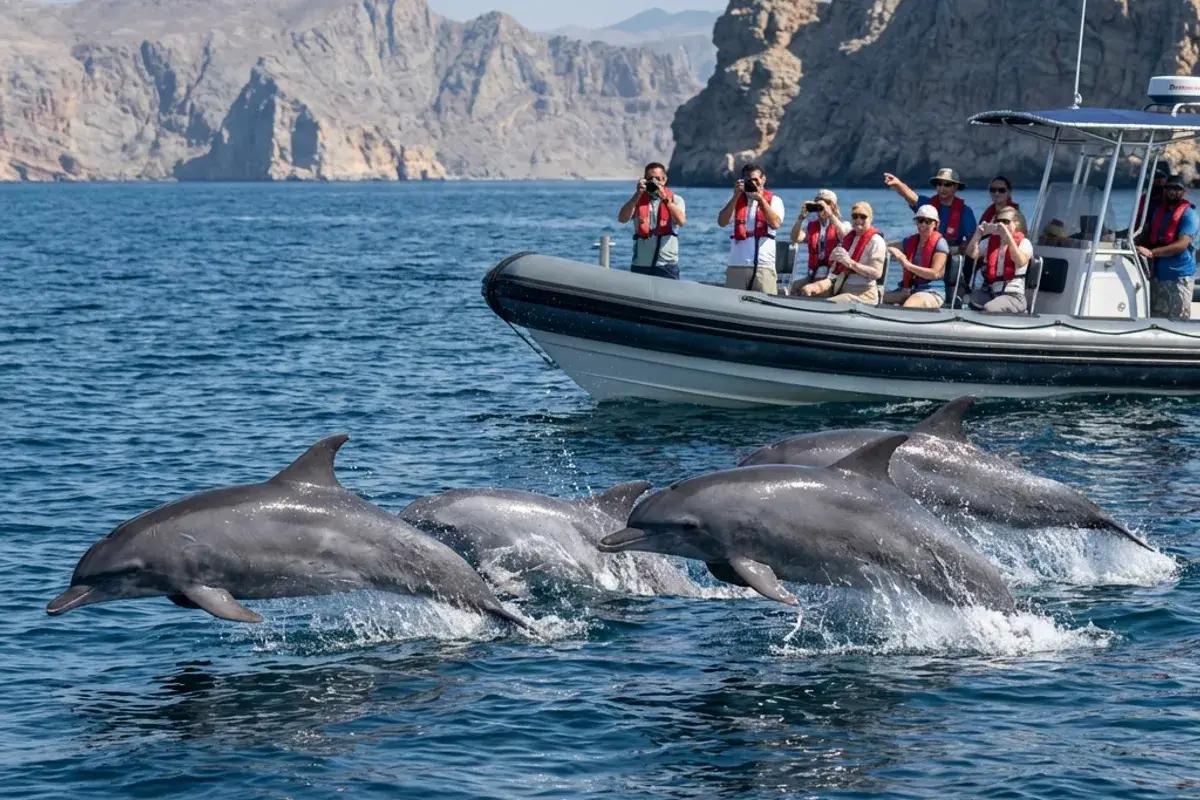
The inner-fjord pods are the ones that bow-ride. They are usually bottlenose, in groups of 6–12, often with calves. They will ride the wake of a slow-moving dhow for 5–10 minutes, then peel off and rejoin the pod.
How to maximise sightings
Five things, in order of importance:
1. Book a morning departure. The afternoon is windier, the surface is choppier, and the dolphins are less playful. 2. Pick the full-day cruise over the half-day. The full-day spends 6 hours in the fjord; the half-day only 3.5. 3. Sit on the bow, but one row back. The front row is the noisiest (slapping waves) and the dolphins approach from behind. 4. Keep your voice down when a pod approaches. Loud voices scare them off. 5. Do not stand up suddenly. Sudden movement on the bow makes the dolphins dive.
How we approach the pods
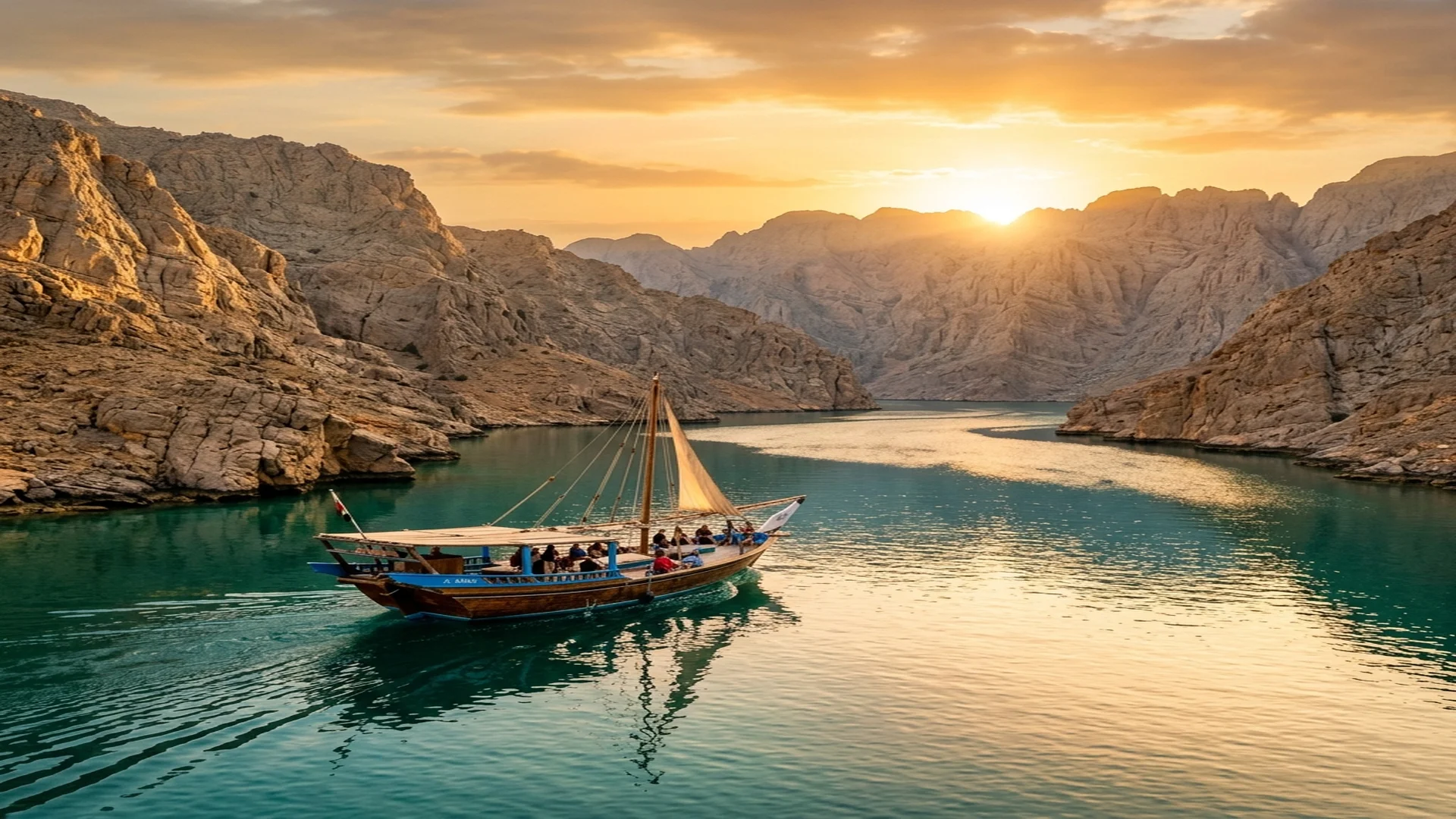
Our captains follow a 30-metre approach distance. We never chase, never surround, never split the pod. The dhow slows to 4–5 knots; the dolphins decide whether to approach. About 80% of the time they do.
We do not feed the dolphins. We do not attract them with bait. The encounters are wild. The pod may stay for 5 minutes or 30 minutes; we never know in advance. We do not guarantee sightings, but we will tell you honestly on the day if the morning has been quiet.
What it looks like
The first sign is the bow wave. The dhow is moving at 6–8 knots; a dolphin surfaces 2 m off the port bow, riding the pressure wave. Then a second, then a third. The first 30 seconds are silent — everyone on the boat is processing what they are seeing. Then the cameras come out.
A typical encounter is 5–10 minutes. The pod surfaces every 20–40 seconds. They breathe, they dive, they come back. The calves are usually further back from the boat, in the middle of the pod. The adults are the ones riding the bow.
Tags
Ready to plan your Musandam trip?
Send us your dates on WhatsApp and we'll send a tailored itinerary within 1 hour.